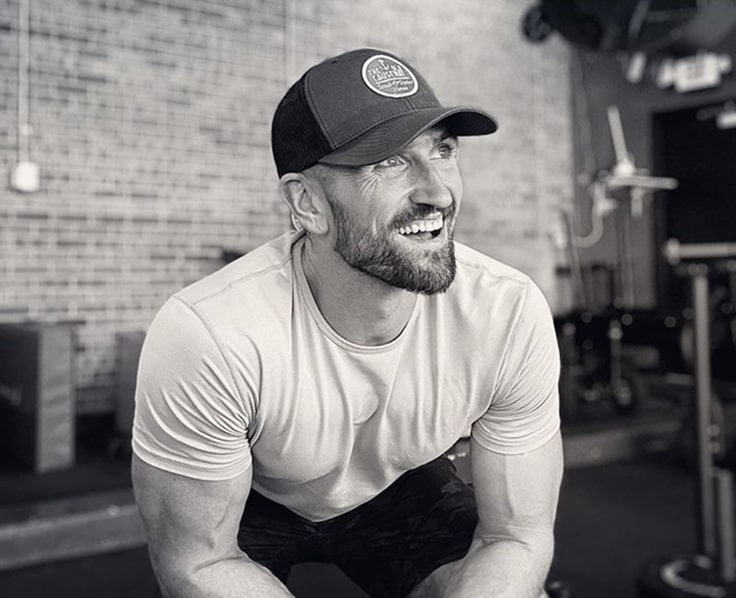
Most people think you need to live in the gym to get strong. They believe that if you aren’t training for two hours a day, you’re wasting your time. But the truth is that a few hours of smart work beats a dozen hours of mindless effort. In this episode of the Stronger Weekly podcast, host Jesse Carerette and fitness expert Ben Barker break down how to build a powerful body without letting it take over your entire life.
We cover everything from the latest health warnings to the real-world struggle of balancing a marriage and a barbell. You’ll get direct answers on nutrition, supplements, and how to train when you have kids and a full-time job. These aren’t theoretical ideas. y.These are practical strategies for busy people who want to stay fit and healthy. Explore more expert insights and fitness resources in the Stronger Weekly blog.
If you have questions about your own routine, visit our contact page and reach out to the Stronger Weekly team. We love hearing from the community. Support the show by leaving a five-star review so more people can grow stronger every week.
Weekly Health Brief: Crucial Updates You Need to Know
Ebola Outbreak in the DRC: Understanding the Threat
The World Health Organization has confirmed that Ebola is back in the Democratic Republic of the Congo. WHO Director General Dr. Tedros is heading to the region to coordinate a response. Right now, there are at least 50 confirmed cases and 32 deaths in the Kazai province. The case fatality rate is a staggering 64%.
For those in the United States, the risk remains very low. Ebola is not airborne. It only spreads through direct contact with the bodily fluids of infected people. If you plan to travel to central Africa, check the CDC advisories. There is currently a level three notice for the DRC and level two warnings for nearby countries.
Hepatitis B Breakthrough: A Potential Functional Cure on the Horizon
Pharmaceutical giant GSK has announced a major win in the fight against Hepatitis B. Their experimental drug has wiped out all detectable signs of the virus in some patients. This is a big deal because 254 million people worldwide live with this virus. It kills over one million people every year through liver cancer and cirrhosis.
Until now, treatment only suppressed the virus. It never got rid of it. In the phase 3 trials, 10% of patients achieved a “functional cure.” This means the virus was gone from their blood after 24 weeks. Dr. Kosh Agarwal from King’s College Hospital says we are finally talking about a cure instead of just control. GSK plans to seek FDA approval by the end of 2026.
Mosquito Repellent Efficacy: Evolving Insect Resistance
Your bug spray might be failing you. A study from the University of California, Irvine, found that mosquitoes are learning to tolerate DEET. This is the active ingredient in most repellents. Even worse, mosquitoes that carry Zika and yellow fever were actually attracted to it in some cases.
Dr. Anna Dan Sakar Ray notes that we have put evolutionary pressure on these insects. The spray we’ve used for 50 years is losing its edge. Picaridin and oil of lemon eucalyptus still seem to work well. The CDC suggests rotating your active ingredients and wearing long sleeves to stay safe.
The Enhanced Games: A Reality Check on Performance Enhancement
The Enhanced Games recently held their first competition in Las Vegas. This event allows athletes to use performance-enhancing drugs (PEDs) openly. The goal was to shatter world records and prove that drugs are the key to human peak performance. The results were surprisingly ordinary.
In the 50-meter freestyle swim, the winner clocked 20.89 seconds. The natural world record is 20.91. That is a difference of two hundredths of a second. Some events were even slower than natural records. Dr. Ross Tucker says this proves that elite performance comes from years of training, genetics, and sleep. Drugs offer small gains, not a magical change.
Childhood Lying: When it Becomes a Concern
Parents often worry when they catch their kids in a lie. A study from the University of Toronto tracked 1,100 children from ages 3 to 27. They found that most kids who lie do not become criminals. In fact, occasional lying is a normal part of growing up and can show higher brain function.
The real concern is a persistent pattern. This means frequent, manipulative lies told for personal gain. Kids who do this have a higher risk of antisocial behavior as adults. Dr. Victoria Talwar says parents should focus on why the child is lying instead of just punishing the act.
Ask Us Anything: Deep Dives with Ben Barker
Essential vs. Optimal Training: Navigating Relationship Dynamics
Luke H. from North Carolina asked about a fight he has with his wife. He sees training as essential, but she sees it as optional. When he is stressed, she tells him to work out less. This is a common struggle for men who love the gym.
Ben and Jesse agree that training is a mental escape. It makes you feel strong and capable. However, there is a point of diminishing returns. If you look great but never spend time with your kids, the ROI is gone. The fix is open communication. Tell your partner that working out makes you a better, more energetic father. But be honest with yourself. If you spend three hours a day in the gym and ignore your family, something has to give.
The Minimum Effective Dose for Fitness
Minimal Effective Dose for Strength Training
Derek from Tulsa wants to know how much time it actually takes to check every fitness box. He wants strength, muscle, cardio, and mobility. Jesse suggests a six-hour weekly framework.
Here is how to break it down:
- Strength Training: 4 sessions of 60 minutes (includes 10 minutes of mobility).
- Zone 2 Cardio: Three 30-minute sessions.
- HIIT/Sprints: Two 15-minute sessions.
You can save time by including your family. Go for a hike or a rucking walk. This turns your cardio into family time, effectively giving you an hour back in your week.
Marcus T. is a dad with three kids under eight. He has to steal time before the house wakes up. Ben recommends a simple compound movement approach, similar to the 5×5 method.
Pick four exercises: a push, a pull, a hinge, and a press. Do five sets of five reps for each. Add five pounds to the bar every week. As long as you push yourself to within two reps of failure on the last set, you will see results. You don’t need a perfect schedule. Just be opportunistic and get it done.
Navigating Fitness Trends: Training for the Right Things
Sean K. is anxious about missing out on trends like Hyrox or CrossFit. He wonders if he is doing the “wrong” training. Jesse suggests being skeptical of things that blow up too fast.
Foundational fitness is what matters. If you want a healthy heart and a strong body, stick to the basics:
- Strength training.
- Zone 2 cardio.
- High-intensity intervals.
- Mobility work.
If you want a community or a “tribe,” then join a CrossFit gym or a run club. Use those for the social spark, but keep your foundation solid. You can be a “Swiss Army Knife” of fitness without following every viral trend.
Supplement Stacks: What's Actually in Your Regimen
Cody B. wanted the honest truth about what the hosts take, minus the sponsors. Jesse keeps it simple: creatine monohydrate, fish oil, D3/K2, a pre-workout, hydration salts, and magnesium at night for better sleep.
Ben takes a similar base but adds a few specifics:
- Whey protein isolate (post-workout).
- Men’s multivitamin.
- Two Brazil nuts daily for selenium.
- One ounce of dark chocolate for blood flow.
- Elk antler velvet (experimental for joint health and vitality).
The takeaway is to start with the basics. Don’t jump into experimental peptides or niche powders until your sleep, diet, and basic supplements are on point.
The Big Three Lifts: Necessity or Options?
Tony M. hates the “big three” (squat, bench, deadlift) because they make him feel stiff or cause tweaks. He wants to know if he can get strong without them. The answer is a loud yes.
You don’t need a barbell to be strong. Look at people who use only kettlebells or calisthenics. They are often shredded and powerful. The goal is to hit the movement patterns:
- Pushing (Presses)
- Pulling (Rows)
- Hinging (Swings or RDLs)
- Squatting (Goblet squats or lunges)
Find the tools that agree with your joints. If a barbell hurts you, use dumbbells or kettlebells.
Feeding Families Without Food Baggage: Nutrition for Kids
Rachel P. wants to model healthy eating for her children without giving them body complexes. The best approach is to frame food as fuel.
Explain to kids that 80% of the time, we eat for nutrients and energy. The other 20% is for joy. Avoid using food as a reward. Jesse also uses the “body is a temple” analogy. This teaches children that taking care of their body is a responsibility. When you frame it as protecting a gift, kids tend to listen more.
Personal Struggles: What Doesn't Make it to Instagram
Pat S. asked what the hosts struggle with that they never post online. Jesse admits to struggling with overwhelm. When life feels out of control, he tends to use escapism, like spending too much time on YouTube or having an extra drink.
Ben shared his history with crippling anxiety and panic attacks. He learned to manage it through breathing, prayer, and gratitude. One helpful trick is to imagine all the world’s problems in a bowl. If you had to trade your problem for a random one, would you? Most of the time, the answer is no. This shift in perspective turns stress into gratitude.
Final Thoughts
Building a better version of yourself doesn’t require a perfect life or a professional coach. That’s the mission behind Stronger Weekly, helping everyday people become stronger physically and mentally.. It requires consistency. Whether you have six hours a week or only thirty minutes before the kids wake up, the key is to just start.
Focus on these three pillars:
- Keep your training simple and efficient.
- Avoid the shortcut of PEDs and focus on recovery and sleep.
- Be a positive role model for those around you.
As Theodore Roosevelt said, “Do what you can with what you have, right where you are.” You don’t need the best gym in the world to get strong. You just need the will to show up today.